

Inside LANDR’s Fair Trade AI Program for Indie Artist: An Opt-In AI Licensing Model with Revenue Share & Upfront Payment
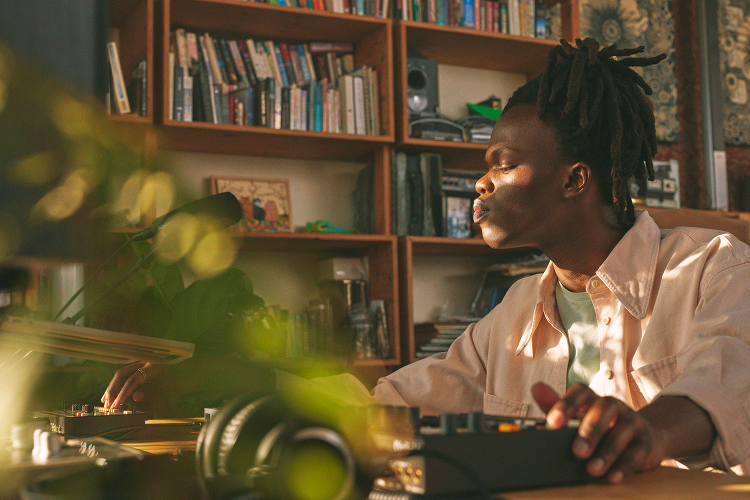
LANDR's Fair Trade AI program adds upfront payments and a broader revenue model for 30,000+ artists, with first payouts starting this month.
MONTREAL, QUEBEC, CANADA, July 14, 2026 /EINPresswire.com/ -- LANDR is moving its Fair Trade AI program into a new phase, introducing an upfront payment program and an expanded revenue model that directly compensates independent artists for AI training use. The initiative now includes more than 30,000 artists. LANDR will begin issuing its first payouts this month.At the center of the initiative is a limited-time $5 per track cash advance program, with the first round available through July 20. While modest at first glance, the advance represents a notable shift in how AI training data is sourced and monetized. It reflects a broader model that combines upfront payments with ongoing revenue sharing for participating artists. Historically, most artists have received no compensation when their music is used to train machine learning models. LANDR’s approach assigns immediate value to that usage, rather than deferring payment to hypothetical future earnings.
Beyond the advance, artists participating in the Fair Trade AI program gain an ongoing revenue stream tied to dataset licensing. When LANDR licenses curated music datasets to AI developers, 25% of net resulting revenue is allocated to participating artists. Payments are distributed proportionally based on the number of tracks contributed.
“The conversation around AI and music has focused almost entirely on what creators stand to lose,” says Pascal Pilon, CEO of LANDR. “We’re proving there’s another path, one built on consent and providing revenue for artists. As technology continues to evolve, artists deserve the choice to participate and the opportunity to benefit from the value created.”
First announced in 2024, the Fair Trade AI program is built on consent-based licensing, a direct contrast to the widespread practice of scraping music without permission. Artists opt-in to participate and retain control over their catalog, opting out of future datasets at any time. Those receiving an advance can opt out after their advance is recouped or after 24 months, whichever comes first. Artists can also opt out immediately by repaying the balance. This framework positions Fair Trade AI as a rights-managed alternative in a space that has largely operated without clear licensing standards.
LANDR’s independence also plays a role in how the program is structured. As one of the last major independently owned distributors—following the acquisition of DistroKid by CVC Capital Partners—LANDR has the flexibility to shape how artist participation, licensing, and revenue sharing evolve as the AI ecosystem matures.
The initiative also signals a broader shift in distribution. Rather than acting solely as a delivery pipeline to streaming platforms, LANDR is increasingly positioning itself as a trusted intermediary between independent artists and AI developers. In this case, LANDR is building what it describes as one of the largest licensed datasets of independent music, effectively creating a bridge between indie catalogs and AI developers.
“For independent artists, distribution can no longer end when a song reaches streaming platforms,” shares Daniel Rowland, VP of Strategy & Partnerships at LANDR. “The future of music distribution is helping creators find new ways to monetize their work, wherever it creates value. Responsibly licensing music for AI is one of those channels, and we’ve built the infrastructure to support it at scale.”
“Streaming fundamentally changed how artists earned money from recorded music,” continues Pilon. “AI represents another major shift. We believe artists should have more than a front-row seat to that transformation—they should have a way to participate in it on their own terms.”
Access to Fair Trade AI is currently limited to LANDR Distribution users, making it both a monetization tool and a potential driver for catalog migration. For artists who are already distributing their catalogs elsewhere, LANDR offers a simple path to switch through its Release Importer Tool, allowing artists to migrate existing releases to LANDR distribution without restarting from scratch.
As AI continues to reshape the music production landscape, LANDR’s model provides a structured, opt-in economy around training data—one that formalizes consent, licensing, and compensation where those standards have largely been absent.
Ashley King
Digital Music News
email us here
Legal Disclaimer:
EIN Presswire provides this news content "as is" without warranty of any kind. We do not accept any responsibility or liability for the accuracy, content, images, videos, licenses, completeness, legality, or reliability of the information contained in this article. If you have any complaints or copyright issues related to this article, kindly contact the author above.
