

Quantum Cryptography Market to Surpass USD 33.15 Billion by 2034 as Post-Quantum Threats Force Global Security Overhaul
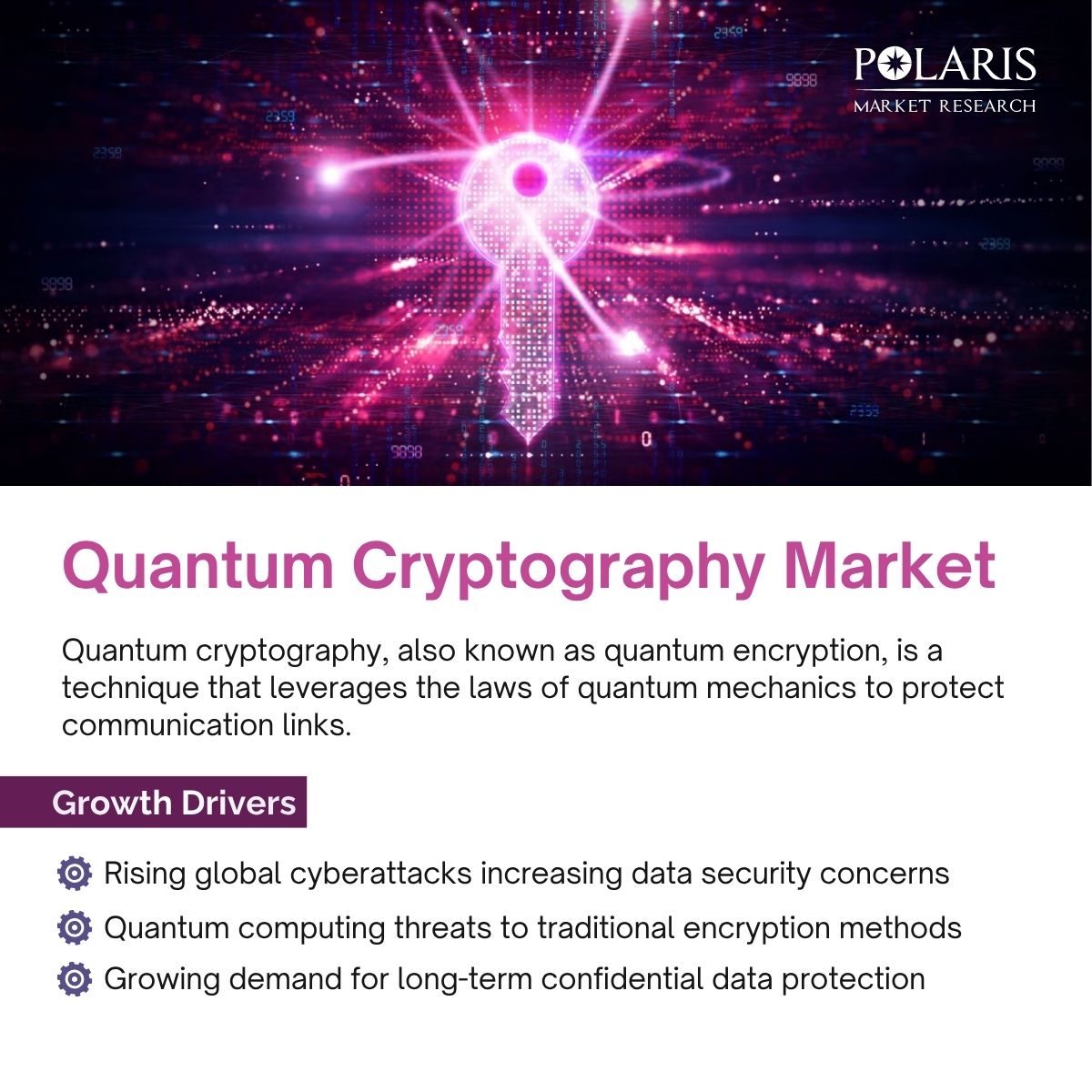
Quantum Cryptography Market
The quantum cryptography market hits $2.93B in 2025, racing to $33.15B by 2034 at 35.3% CAGR as quantum threats force a global security overhaul.
"Quantum computing is no longer a distant threat. Nation-states are harvesting encrypted data today to decrypt tomorrow. Organizations that delay quantum-safe encryption are already falling behind.”
NEW YORK CITY, NY, UNITED STATES, May 26, 2026 /EINPresswire.com/ -- The growth is mainly linked to rising cyber threats from nation-states and increasing risks to data security. Meanwhile, the fast progress in quantum computing is creating urgency. There is an increasing need for robust protection systems. Many organizations are now moving towards quantum-safe encryption. This is essential to protect sensitive information. — Prajakta Bengale
𝐀𝐜𝐜𝐨𝐫𝐝𝐢𝐧𝐠 𝐭𝐨 𝐚 𝐦𝐚𝐫𝐤𝐞𝐭 𝐫𝐞𝐬𝐞𝐚𝐫𝐜𝐡 𝐫𝐞𝐩𝐨𝐫𝐭 𝐛𝐲 𝐏𝐨𝐥𝐚𝐫𝐢𝐬 𝐌𝐚𝐫𝐤𝐞𝐭 𝐑𝐞𝐬𝐞𝐚𝐫𝐜𝐡, 𝐭𝐡𝐞 𝐪𝐮𝐚𝐧𝐭𝐮𝐦 𝐜𝐫𝐲𝐩𝐭𝐨𝐠𝐫𝐚𝐩𝐡𝐲 𝐦𝐚𝐫𝐤𝐞𝐭 𝐰𝐚𝐬 𝐯𝐚𝐥𝐮𝐞𝐝 𝐚𝐭 𝐔𝐒𝐃 2.93 𝐛𝐢𝐥𝐥𝐢𝐨𝐧 𝐢𝐧 2025. 𝐓𝐡𝐞 𝐦𝐚𝐫𝐤𝐞𝐭 𝐢𝐬 𝐞𝐱𝐩𝐞𝐜𝐭𝐞𝐝 𝐭𝐨 𝐫𝐞𝐠𝐢𝐬𝐭𝐞𝐫 𝐚 𝐂𝐀𝐆𝐑 𝐨𝐟 35.30% 𝐟𝐫𝐨𝐦 2026 𝐭𝐨 2034.
Government regulations and compliance requirements are also driving adoption. Industries are actively exploring quantum cryptography solutions. This include banking, defense, and healthcare. The report states that as quantum computing progresses, the demand for secure communication methods will rise steadily.
𝗡𝗼𝘁𝗲: 𝗚𝗲𝘁 𝗶𝗻𝘀𝘁𝗮𝗻𝘁 𝗮𝗰𝗰𝗲𝘀𝘀 𝘁𝗼 𝘁𝗵𝗲 𝗿𝗲𝗽𝗼𝗿𝘁. 𝗪𝗲’𝗿𝗲 𝗵𝗮𝗽𝗽𝘆 𝘁𝗼 𝗱𝗶𝘀𝗰𝘂𝘀𝘀 𝘁𝗵𝗲 𝗸𝗲𝘆 𝗶𝗻𝘀𝗶𝗴𝗵𝘁𝘀 𝗮𝗻𝗱 𝗮𝗱𝗮𝗽𝘁 𝘁𝗵𝗲 𝗮𝗻𝗮𝗹𝘆𝘀𝗶𝘀 𝘁𝗼 𝘀𝘂𝗽𝗽𝗼𝗿𝘁 𝘆𝗼𝘂𝗿 𝘀𝘁𝗿𝗮𝘁𝗲𝗴𝗶𝗰 𝗱𝗲𝗰𝗶𝘀𝗶𝗼𝗻𝘀.
𝐌𝐚𝐫𝐤𝐞𝐭 𝐎𝐯𝐞𝐫𝐯𝐢𝐞𝐰 & 𝐒𝐢𝐳𝐞
𝐖𝐡𝐲 𝐐𝐮𝐚𝐧𝐭𝐮𝐦 𝐂𝐫𝐲𝐩𝐭𝐨𝐠𝐫𝐚𝐩𝐡𝐲 𝐈𝐬 𝐍𝐨 𝐋𝐨𝐧𝐠𝐞𝐫 𝐚 𝐅𝐮𝐭𝐮𝐫𝐞 𝐓𝐞𝐜𝐡𝐧𝐨𝐥𝐨𝐠𝐲
Quantum cryptography is no longer seen as a future only technology. The shift is becoming more practical as problems grow that advances in quantum computing could weaken traditional encryption methods like RSA and ECC. This underscores the importance of more effective protection systems than ever. The year 2024 marked a significant milestone. The NIST post-quantum standards were approved. This gave businesses, governments and security providers a more concrete way forward to transition to post-quantum cryptography and more comprehensive quantum-safe encryption strategies. Consequently, adoption is gaining momentum in key industries.
𝐊𝐞𝐲 𝐌𝐚𝐫𝐤𝐞𝐭 𝐒𝐞𝐠𝐦𝐞𝐧𝐭𝐬
• By Offering: Solutions, Services
• By Security Type: Network Security, Application Security
• By Vertical Outlook: Government, Defense, BFSI, Health Care, Retail & eCommerce
• By Regional Outlook:
o North America: US, Canada
o Europe: Germany, France, UK, Italy, Spain, Netherlands, Russia, Rest of Europe
o Asia Pacific: China, Japan, India, Malaysia, South Korea, Indonesia, Australia, Vietnam, Rest of Asia Pacific
o Middle East & Africa: Saudi Arabia, UAE, Israel, South Africa, Rest of Middle East & Africa
o Latin America: Mexico, Brazil, Argentina, Rest of Latin America
𝐊𝐞𝐲 𝐌𝐚𝐫𝐤𝐞𝐭 𝐃𝐫𝐢𝐯𝐞𝐫𝐬
𝐄𝐬𝐜𝐚𝐥𝐚𝐭𝐢𝐧𝐠 𝐂𝐲𝐛𝐞𝐫 𝐓𝐡𝐫𝐞𝐚𝐭𝐬 𝐚𝐧𝐝 "𝐇𝐚𝐫𝐯𝐞𝐬𝐭 𝐍𝐨𝐰, 𝐃𝐞𝐜𝐫𝐲𝐩𝐭 𝐋𝐚𝐭𝐞𝐫" 𝐀𝐭𝐭𝐚𝐜𝐤𝐬 𝐀𝐜𝐜𝐞𝐥𝐞𝐫𝐚𝐭𝐞 𝐃𝐞𝐦𝐚𝐧𝐝
Escalating cyber threats are one of the biggest reasons behind the growing demand for quantum cryptography. The “harvest now, decrypt later” threat is creating real problem in sectors. In this type of attack, bad actors collect encrypted data today and store it for future use. They expect that eventually, sufficiently powerful quantum computers will be able to decrypt this data in the future. This is the reason why quantum-safe encryption is already starting to become a requirement before large-scale quantum computers are even available.
Nation-state cyber espionage is also pushing governments to invest in quantum key distribution and other secure communication systems. In the BFSI sector, institutions are looking at quantum-resistant protocols. This is to protect long-term financial records and confidential customer information. At the same time, there are growing requirements for healthcare and critical infrastructure protection. This is under regimes such as NIS2 and CISA. These regulations are putting more pressure on organizations to improve their security strategies.
Funding is also supporting market growth. Venture capital activity is increasing, and governments are backing research. This program includes the US CHIPS Act and the EU Quantum Flagship. This is helping the larger cybersecurity market move closer to quantum ready solutions.
𝐂𝐨𝐦𝐩𝐞𝐭𝐢𝐭𝐢𝐯𝐞 𝐋𝐚𝐧𝐝𝐬𝐜𝐚𝐩𝐞 & 𝐈𝐧𝐧𝐨𝐯𝐚𝐭𝐢𝐨𝐧
𝐋𝐞𝐚𝐝𝐢𝐧𝐠 𝐂𝐨𝐦𝐩𝐚𝐧𝐢𝐞𝐬 𝐑𝐚𝐜𝐢𝐧𝐠 𝐭𝐨 𝐂𝐚𝐩𝐭𝐮𝐫𝐞 𝐭𝐡𝐞 𝐐𝐮𝐚𝐧𝐭𝐮𝐦 𝐒𝐞𝐜𝐮𝐫𝐢𝐭𝐲 𝐒𝐨𝐥𝐮𝐭𝐢𝐨𝐧𝐬 𝐌𝐚𝐫𝐤𝐞𝐭
The quantum security solutions market is becoming more competitive as different types of companies rush to enter the space. Telecom giants, defense contractors, and pure-play quantum startups are all working to build stronger quantum-safe encryption and quantum key distribution (QKD) systems. Important players include ID Quantique, Toshiba, IBM, Quantinuum, and MagiQ Technologies, each pushing forward with new technology and partnerships.
Strategic mergers and acquisitions (M&A) are increasing. Several companies are winning government contracts to support secure communication networks. Satellite-based QKD networks are also gaining attention. China’s Micius satellite and the EU’s EuroQCI initiative are strong examples of how governments are moving toward large-scale quantum-secure infrastructure.
At the same time, Quantum-as-a-Service (QaaS) models are becoming more common. These delivery models make it easier for organizations to adopt quantum cryptography. Firms need not build their own infrastructure from scratch. The patent race is becoming fiercer too, particularly in North America and Asia-Pacific. More companies are filing patents related to QKD and quantum-safe encryption. This competition is expected to accelerate innovation, and bring more cost-effective quantum security solutions to the market.
𝐑𝐞𝐠𝐢𝐨𝐧𝐚𝐥 𝐀𝐧𝐚𝐥𝐲𝐬𝐢𝐬
𝐍𝐨𝐫𝐭𝐡 𝐀𝐦𝐞𝐫𝐢𝐜𝐚 𝐃𝐨𝐦𝐢𝐧𝐚𝐭𝐞𝐬; 𝐀𝐬𝐢𝐚-𝐏𝐚𝐜𝐢𝐟𝐢𝐜 𝐄𝐦𝐞𝐫𝐠𝐞𝐬 𝐚𝐬 𝐭𝐡𝐞 𝐅𝐚𝐬𝐭𝐞𝐬𝐭-𝐆𝐫𝐨𝐰𝐢𝐧𝐠 𝐐𝐮𝐚𝐧𝐭𝐮𝐦 𝐂𝐫𝐲𝐩𝐭𝐨𝐠𝐫𝐚𝐩𝐡𝐲 𝐇𝐮𝐛
The quantum cryptography market is growing at different speeds across regions. Government policies, cybersecurity budgets, and national quantum programs are shaping which areas lead and which grow faster. North America currently holds the largest share. Asia-Pacific is expanding the quickest.
• North America continues to lead the global quantum cryptography market. The region benefits from strong federal support. It includes the US NSM-10 directive that pushes federal agencies toward post-quantum cryptography. The Pentagon has also started QKD pilot programs to test secure communication links. Private investment in quantum security remains high. The investment helps the network security market grow faster in many other regions.
• Europe is advancing the EU Quantum Flagship program and EuroQCI backbone network. These programs are developing a structured path for secure communication across member countries. GDPR-driven data protection needs are also pushing enterprises to adopt quantum-safe encryption and upgrade their security infrastructure.
• Asia-Pacific is emerging as the fastest-growing region. China has built significant quantum satellite infrastructure. It includes the Micius satellite, which helps long-distance quantum communication. Japan has launched a national quantum strategy focusing on both research and commercialization. India is also developing an interest in quantum technologies, with new investments and policy discussions taking place.
• The Middle East is not far behind. The UAE and Saudi Arabia are investing in quantum cryptography as part of their Vision 2030 digital sovereignty goals. These countries need to secure critical data and communication networks while reducing dependence on foreign technology.
Regional investments are on the rise. Government strategies are more defined today. Countries are sponsoring quantum research. Security rules are pushing adoption North America is leading. Quantum cryptography is spreading faster. Asia-Pacific is growing fastest. Europe and the Middle East follow. The world is moving toward quantum-safe protection, step by step.
𝐅𝐢𝐧𝐚𝐥 𝐌𝐚𝐫𝐤𝐞𝐭 𝐎𝐮𝐭𝐥𝐨𝐨𝐤
The quantum cryptography market is moving into a more active phase as public and private organizations respond to the long-term risks created by quantum computing. NIST finalized its first three post-quantum cryptography standards in August 2024 and said organizations should start transitioning now, while NSM-10 directs U.S. agencies to migrate vulnerable systems to quantum-resistant cryptography. At the same time, Europe is building EuroQCI as a secure quantum communication infrastructure in the EU. This points to the shift not being limited to one region. These developments suggest that quantum-safe planning is increasingly transitioning from a distant research topic to a mainstream cybersecurity strategy. As investments increase, regulations clarify and deployment models mature, stronger adoption should be seen in the market. This adoption should be seen across government, finance, healthcare, telecom and critical infrastructure environments. This suggests steady long term demand for quantum cryptography solutions around the world.
𝐀𝐛𝐨𝐮𝐭 𝐭𝐡𝐞 𝐑𝐞𝐩𝐨𝐫𝐭
𝐀𝐜𝐜𝐞𝐬𝐬 𝐭𝐡𝐞 𝐅𝐮𝐥𝐥 𝐐𝐮𝐚𝐧𝐭𝐮𝐦 𝐂𝐫𝐲𝐩𝐭𝐨𝐠𝐫𝐚𝐩𝐡𝐲 𝐌𝐚𝐫𝐤𝐞𝐭 𝐑𝐞𝐬𝐞𝐚𝐫𝐜𝐡 𝐑𝐞𝐩𝐨𝐫𝐭:
https://www.polarismarketresearch.com/industry-analysis/quantum-cryptography-market
The Polaris Market Research report on the Quantum Cryptography Market provides in-depth analysis covering market sizing, segmentation, competitive intelligence, and forecasts. The report equips cybersecurity executives, investors, and policy strategists with the data needed to make high-stakes decisions in an era of rapid quantum disruption. It helps organizations understand where the market is heading and how to prepare for quantum-safe security requirements across industries.
Likhil G
Polaris Market Research and Consulting
+1 929-297-9727
email us here
Legal Disclaimer:
EIN Presswire provides this news content "as is" without warranty of any kind. We do not accept any responsibility or liability for the accuracy, content, images, videos, licenses, completeness, legality, or reliability of the information contained in this article. If you have any complaints or copyright issues related to this article, kindly contact the author above.
